
Native Hawaiian Rights (LWPA 581)
Native Hawaiian Rights provides students with a foundational understanding of Hawaiʻi’s unique history, traditions, and legal landscape. The course introduces traditional Native Hawaiian values and knowledge systems and examines how these continue to shape Hawaiʻi law and legal practice. Students examine the evolution of Native Hawaiian rights to land and other resources through important laws and cases, including the Kānaka Maoli land tenure system and its conversion to a hybridized fee-simple land system via the Māhele; the Public Land Trust; the Hawaiian Home Lands trust; charitable trusts established by ali‘i for the benefit Native Hawaiians; and traditional and customary rights and practices. The course also addresses current cases, statutes, and regulations relating to Native Hawaiians’ political status as well as developments in international law affecting it. Through course materials, assignments, and class discussions, students gain familiarity with pivotal events in Hawaiʻi’s legal history and their enduring impacts, delve into laws that safeguard the unique legal rights of Native Hawaiians, and explore important Native Hawaiian values and governance principles such as kuleana, aloha ʻāina, kapu aloha, and more.
Native Hawaiian Rights Clinic (LAW 590I)
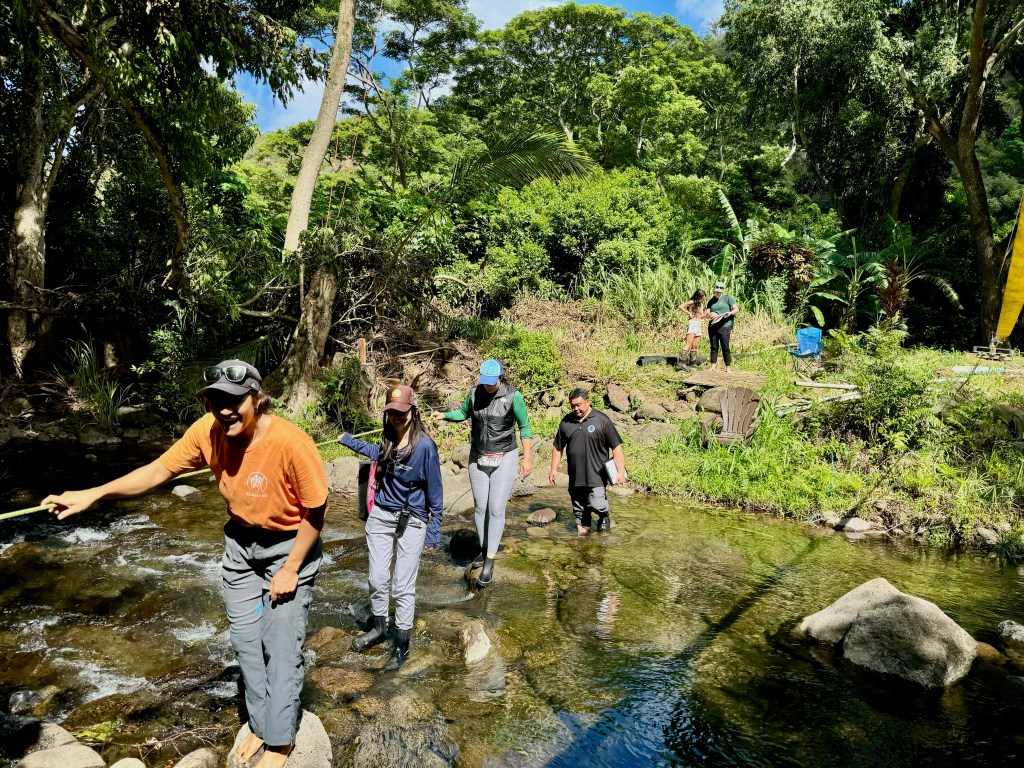
The Native Hawaiian Rights Clinic is a live-client clinic that prepares second- and third-year law students for practice by providing practical, non-litigation lawyering experience in the context of issues affecting Hawaiʻi’s Indigenous culture, people, and natural resources. The Clinic enables students to develop essential lawyering skills—analyzing legal issues, developing and implementing case strategies, collaborating with clients and experts, conducting factual and legal research, and writing persuasively—while providing direct level services to rural communities. It does so by modeling aʻo aku, aʻo mai—the reciprocal learning that takes place between law students, community members, cultural practitioners, and others—with site visits that help students to deepen their understanding of affected communities, resources, and political dynamics. Since 2021, students have assisted Clinic clients on a range of issues, including the research necessary to frame and implement legal and community strategies regarding the use of natural and cultural resources in Maui Komohana (West Maui).
Emerging hawaiʻi Water Issues (LWPA 584)
This course explores the legal and cultural frameworks for water resource management in Hawaiʻi nei under the State Constitution, Water Code, and common law. Current water struggles serve as case studies to learn the in-and-outs of the state litigation process and track the evolution of the public trust, precautionary principle, and other legal, scientific, and policy areas where Hawaiʻi leads the nation.


Federal Indian Law (LAW 527)
Federal Indian Law introduces students to the complex legal framework governing the sovereignty, jurisdiction, and powers of tribal, federal, and state governments. The course equips students to analyze both the limitations and possibilities for exercising Indigenous self-determination under U.S. law. Students describe the class as rigorous, eye-opening, and deeply relevant, especially in how it connects federal Indian law principles to Native Hawaiian self-governance. Many credit the course with expanding their understanding of Indigenous rights and with strengthening their commitment to advocacy grounded in doctrine, history, and justice.
Pacific Island Legal Systems (LWPA 594)
Pacific Island Legal Systems introduces students to the legal systems of the U.S.-affiliated island nations and territories in the Pacific—the U.S. territories of American Samoa, Guam, and the Commonwealth of the Northern Mariana Islands, and the freely associated states of Palau, the Marshall Islands, and the Federated States of Micronesia. Students study a range of issues incident to the development of these legal systems, including history and politics, constitutional development, recognition and application of customary law and land tenure regimes, and the complex relationship between law and custom. Using critical legal tools, students increase their knowledge of the substantive laws of these jurisdictions while deepening their awareness of the larger legal systems in which regional self-determination struggles have operated. In Fall 2024, Professor Serrano co-taught the course with human rights attorney Julian Aguon.
Race, Culture, and Law (LAW 544)
U.S. cases and legal theory emphasizing law in the social construction of racial categories, shifts in race-based anti-discrimination law, and the interaction of culture and law in judicial decision-making.
Foundations for Kānāwai (LWPA 582E)
With a focus on Hawaiʻi’s history and justice through an ʻŌiwi lens, this seminar will examine important cultural and legal foundations as essential context for surveying and understanding the evolving body of Native Hawaiian Law today. This course will begin to explore the existing legal framework as well as its context in the area of Native Hawaiian Law. Areas of study also include ʻike Hawaiʻi (Hawaiian knowledge) including ʻāina, traditional and customary practices, and other guiding values such as pono, kuleana, and more. This course will also engage practitioners, leaders, and legal scholars in the fields of law, Hawaiian Studies and more. Finally, this course will preview emerging issues affecting Native Hawaiian rights, contemplate kuleana around pono participation in the legal profession in Hawaiʻi, and consider the efforts in effectuating restorative justice for Hawaiʻi and its people.
Historic Preservation Law (LAW 503)
This course studies cultural and historic preservation laws and how they affect efforts to protect and preserve native cultural heritage. The course will examine state and federal laws including: the National Environmental Policy Act and its state equivalent; the Section 106 review process under the National Historic Preservation Act; Hawai‘i law requiring cultural impact statements; the American Indian Religious Freedom Act; and case law and administrative processes established to ensure that native voices are heard in historical and cultural resource management.
Examining pathways to self-determination (LWPA 582E)
Examining Pathways to Self-Determination is Assistant Professor Kauanoe’s upper-level seminar exploring the legal, historical, and human rights foundations of Native Hawaiian self-determination and self-governance. The course explores Hawaiian Kingdom-era jurisprudence, federal Indian law, constitutional provisions, and international Indigenous human rights instruments to illuminate how law has shaped Indigenous sovereignty and self-determination. The course empowers students to produce research papers integrating doctrine, history, and contemporary advocacy, while fostering critical thinking about Indigenous self-governance, with a particular focus on pathways to self-determination for Native Hawaiians.
 Ka Huli Ao